Positive Impact of AI: How This AI-Powered App Alerts Community Of Disasters and Save Lives
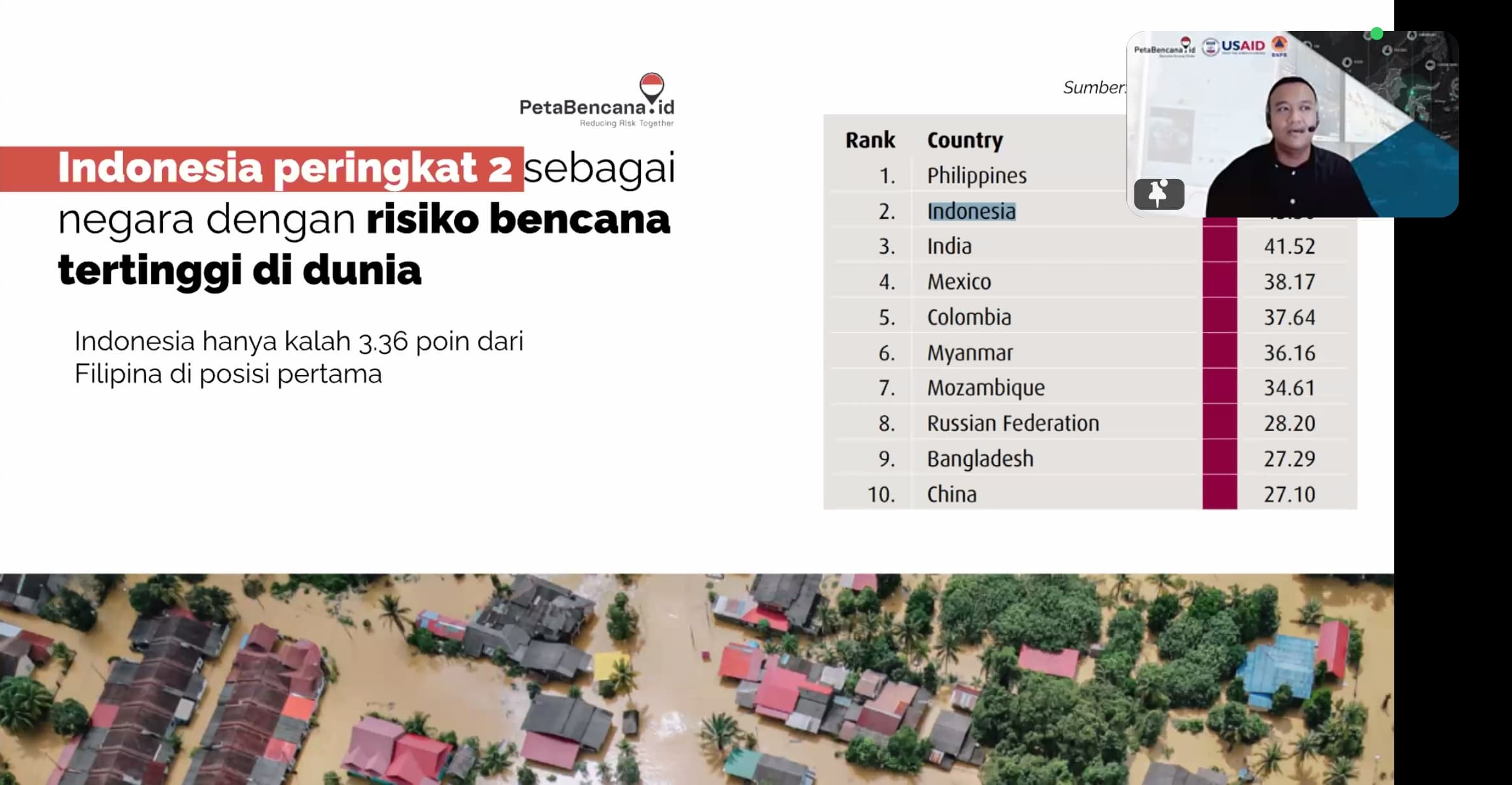
While scrolling through social media, have you noticed the growing number of posts about flooding, forest fires, and landslides? This is not just your feeling – the data actually backs it up. In July, Indonesia faced severe flooding and forest fires simultaneously. The floods in Gorontalo affected over 36,000 people, heavy rains in Central Papua triggered landslides impacting 3,265 individuals, and forest fires occurred in Aceh, South Sumatra, and East Java.
According to data from the National Disaster Management Agency (BNPB), Indonesia saw a 39.39% rise in natural disasters in 2023, with a total of 5,940 incidents (vs 3,544 the previous year). The Head of BNPB, Suharyanto, reported that Indonesia now experiences 15 to 17 disasters daily.
Although climate-related disasters cannot always be prevented, disaster notifications can significantly reduce their impact by enabling residents and response teams to take swift preventive measures. During a disaster, having access to current information is crucial for people to understand how to protect themselves, their families, and their property.
According to the 2024 Indonesian Internet Service Providers Association (APJII) Survey, Indonesia’s internet penetration rate has risen to 79.5% . This means that out of a total population of 278.6 million, 221,563,479 people are connected to the internet. Additionally, the number of cellular connections exceeds the total population, reaching more than 128%.
These facts makes Indonesia an ideal candidate for adopting a mobile service-based disaster warning system.
On July 29, 2024, Yayasan Peta Bencana, with support from USAID, launched the first real-time digital disaster notification service in Indonesia. The disaster notification service, which is free to all users through plaftorm such as WhatsApp, provides instant notifications about earthquakes, floods, volcanic eruptions, forest fires, haze, and strong winds, including real-time updates on the impacts of these disasters.
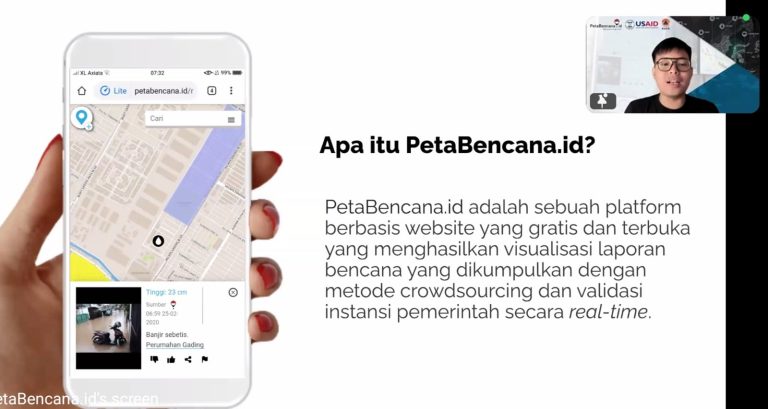
Notifications are customized based on geographic location, ensuring relevant and localized information for each resident. As the world’s first free, real-time disaster notification service, this innovation demonstrates Indonesia’s leadership in advancing technology for climate adaptation.
“Climate adaptation decision support tools have tended to centralize information in control rooms, with dashboards accessible to a small group of professionals. However, to meet the challenges of the climate emergency, every citizen must be empowered to participate in community-led adaptation efforts. By leveraging the mobile phone networks we all have in our pockets, we can ensure that every citizen is informed and prepared to adapt to increasingly unpredictable weather patterns. This service is a milestone in Indonesia’s disaster risk reduction efforts.”
Although technology is at the forefront of this innovation, Peta Bencana has also integrated this solution with the local wisdom to create an effective step to minimize the impact of disasters that occurs in Indonesia. The disaster notification service of Peta Bencana Foundation integrates data from various sources, including local residents’ observations, leveraging the knowledge held by communities, to ensure the accuracy, speed and relevance of disaster notifications.
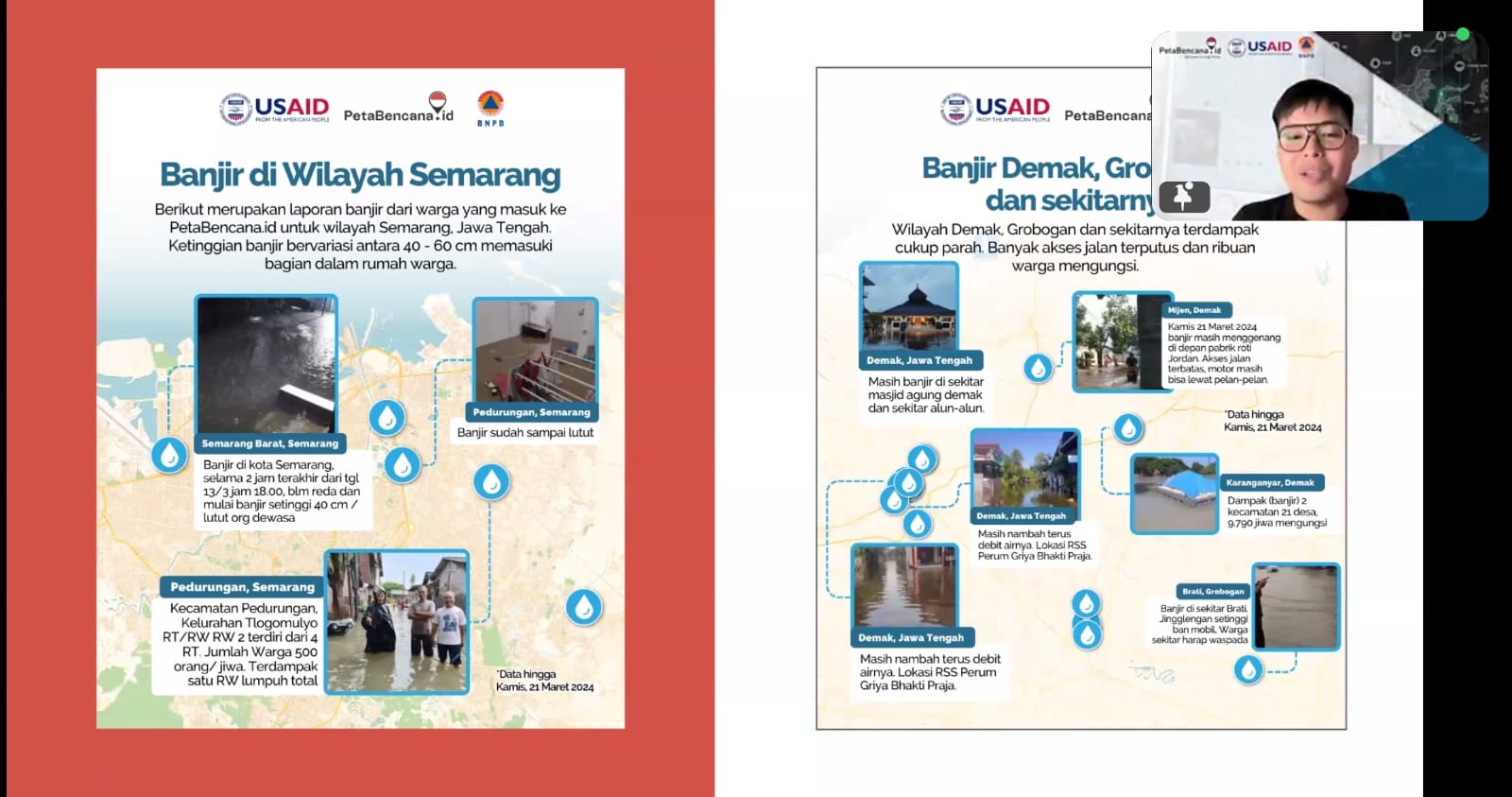
Head of the Meteorology, Climatology, and Geophysics Agency (BMKG) who is also the Permanent Representative of Indonesia to the World Meteorological Organization (WMO), Dwikorita Karnawati, emphasized that the disaster warning (notification) system must be implemented and communicated in ways that are easy to understand and relevant to the needs of the local community. According to Dwikorita Karnawati, the success of the disaster warning system can be measured by reducing the “gap” between information and the ability of the community to act quickly and appropriately.
As extreme weather events become more frequent and intense, enhancing synergy, communication, and coordination among various stakeholders is increasingly crucial. Dwikorita Karnawati stressed that for early warning systems to be effective, they must provide actionable information. In line with this, BMKG and Yayasan Peta Bencana have established a model partnership where their disaster information systems complement each other. This collaboration integrates local wisdom with the latest technological advances to enhance early warning services.
As BMKG warns of heavy rain and potential flooding in eastern Indonesia in the coming months, and forest fires in western Indonesia during the peak of the dry season, now is the ideal time to adopt a service that keeps everyone in Indonesia informed and safe.
Learn more about Peta Bencana below
Share this article
Share on facebook
Facebook
Share on twitter
Twitter
Share on linkedin
LinkedIn
Share on whatsapp
Whatsapp