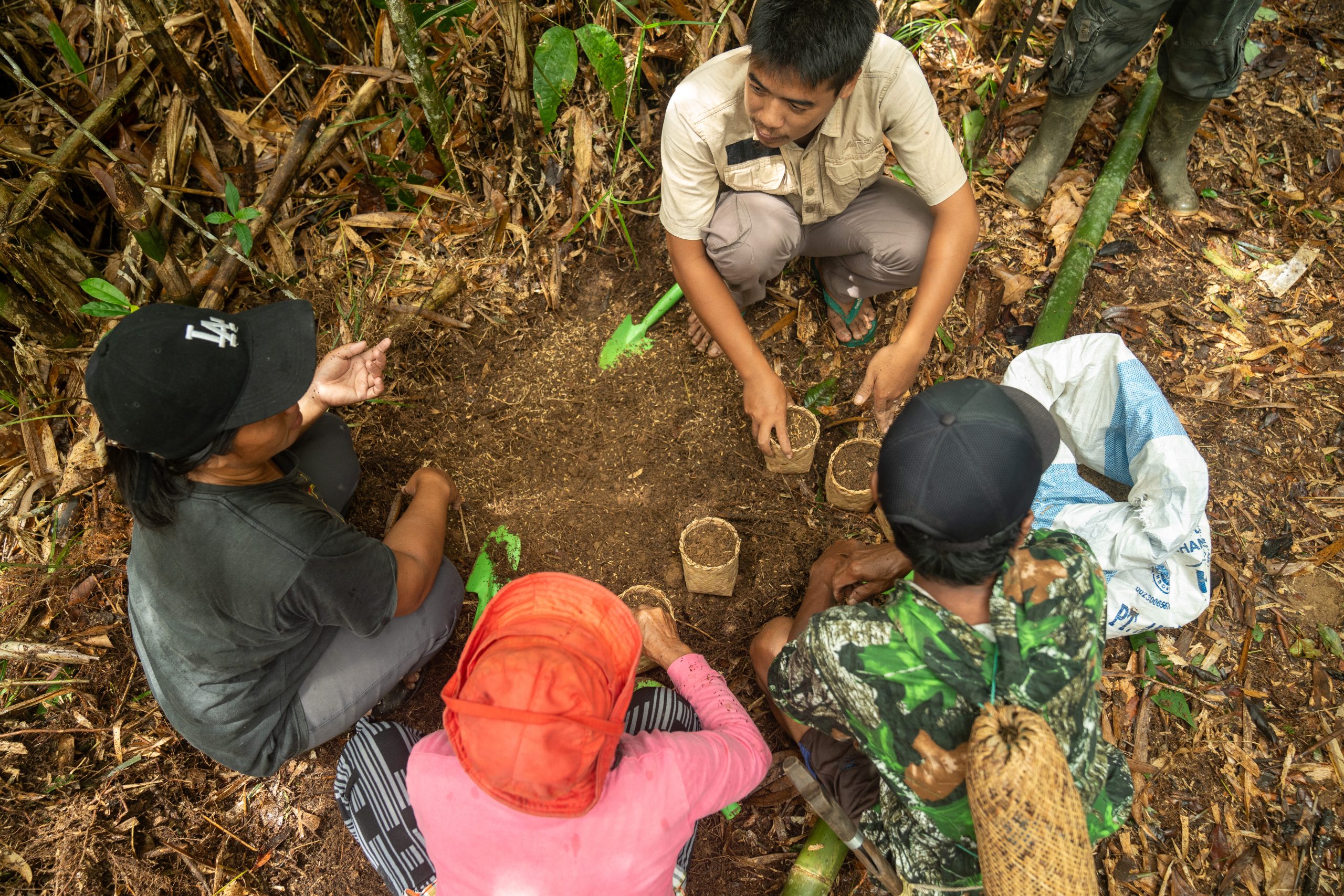
Why Human Capital is Indonesia’s and Asia’s Biggest Climate Asset

According to Indonesia’s National Development Planning Agency (Bappenas), the transition to a green economy could create 1.8 million environmentally friendly jobs by 2030. The numbers felt bold, almost utopian. Jobs in renewable energy, electric vehicles, land restoration, and waste management paint a picture of an economy that is not only more sustainable, but also more resilient and inclusive.
But the real question is: are we preparing people to take these jobs?

The green transition is not just about replacing coal with solar panels or building electric buses. It’s about equipping human beings – students, workers, mid-career professionals, and even seasoned leaders – with the knowledge, skills, and networks they need to play a role in this transformation.

And here lies the gap.
This is not only true here in Indonesia, but also extends to the wider Southeast Asia region – the enthusiasm is there. According to research spearheaded by Jobs that makesense, nearly 50% of professionals want to transition into the green sector, while 40% are open to exploring new opportunities. The appetite is undeniable.
But job seekers often find themselves stuck in a frustrating loop of enthusiasm meeting systemic barriers.

“I apply a lot but never get the opportunity to move further"

“Sometimes I don’t even know if the role has already been filled, or if I even meet the real requirements"

Throughout the survey, a consistent and recurring theme emerges: the lack of access.
For fresh graduates, the green economy feels both exciting and overwhelming. Many are choosing to pursue master’s degrees in ESG, sustainable development, or humanitarian action. Others look to certifications – ESG risk management, government qualifications, sector-specific training.
But even with additional schooling, there’s a gap in knowing where the real opportunities are.

“Sustainability roles seem so niche. It’s hard to even understand what positions exist out there.”

Without clear pathways, many aspiring enthusiasts risk over-educating themselves without ever entering the field.

Career Transitioners: Skills Don’t Always Translate

For mid-career professionals, the ambition to pivot into green jobs often runs up against employer expectations. Many in this stage – along with senior respondents – encounter more complex challenges: mismatched salaries, a shortage of roles that are truly “impact-driven” rather than corporate-led CSR, and even mental health struggles like impostor syndrome. 
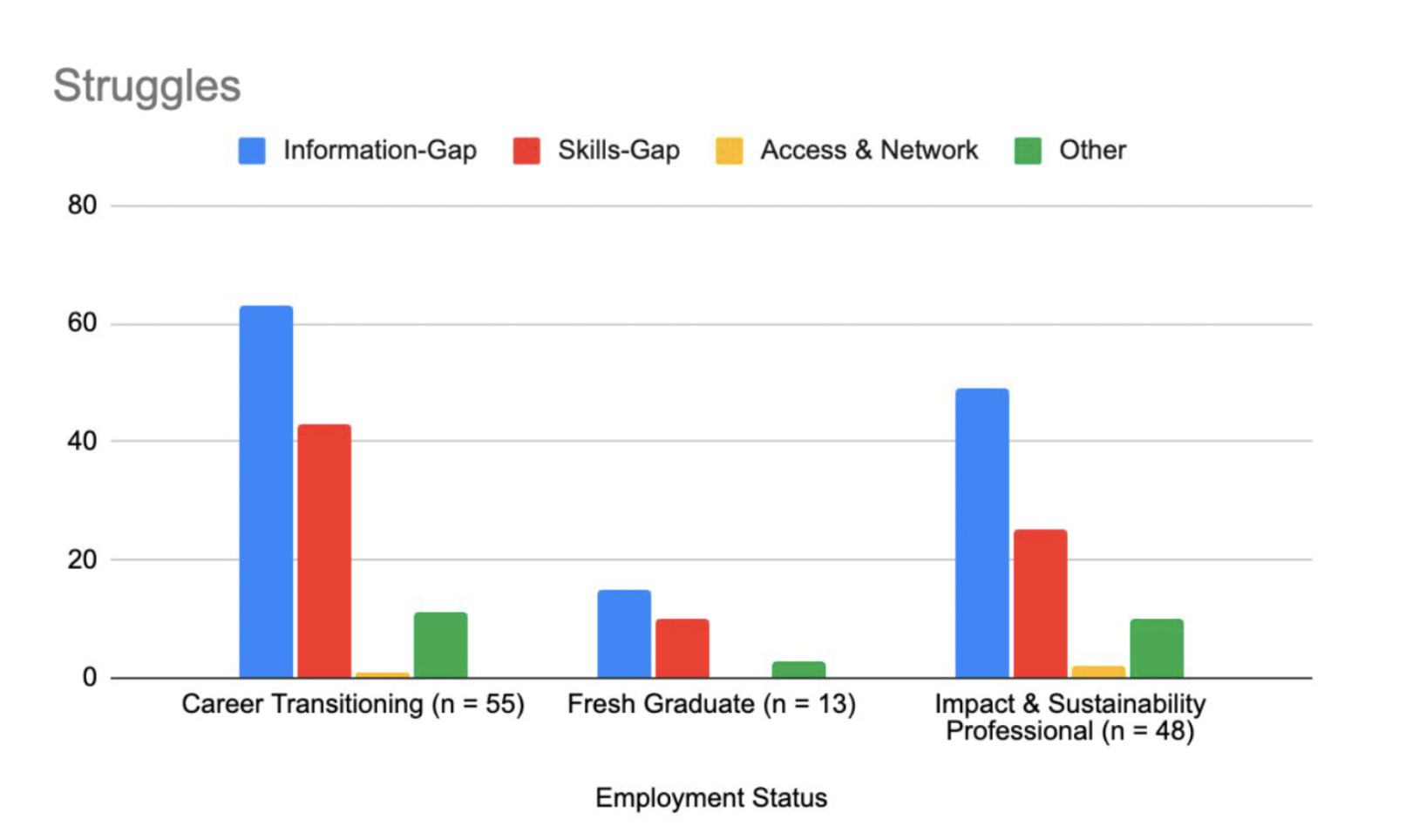
Jobs that makesense survey results
Tackling these issues calls for more tailored solutions: clearer salary benchmarks, peer-support cohorts, and better transparency around which roles deliver real impact.
Some opt for intensive programs like “Carbon Literacy,” “Circular Economy,” or master’s degrees in sustainable strategies to translate their experience. Senior career shifters often choose more specialized or high-level courses (e.g., certificate in sustainable strategies, one-health diplomas, or full master’s degrees) to compensate for a lack of direct impact-sector experience.

Information. Skills. Networks.

At the heart of it all, three gaps emerge across Southeast Asia:

A Regional Response: By Southeast Asians, For Southeast Asians

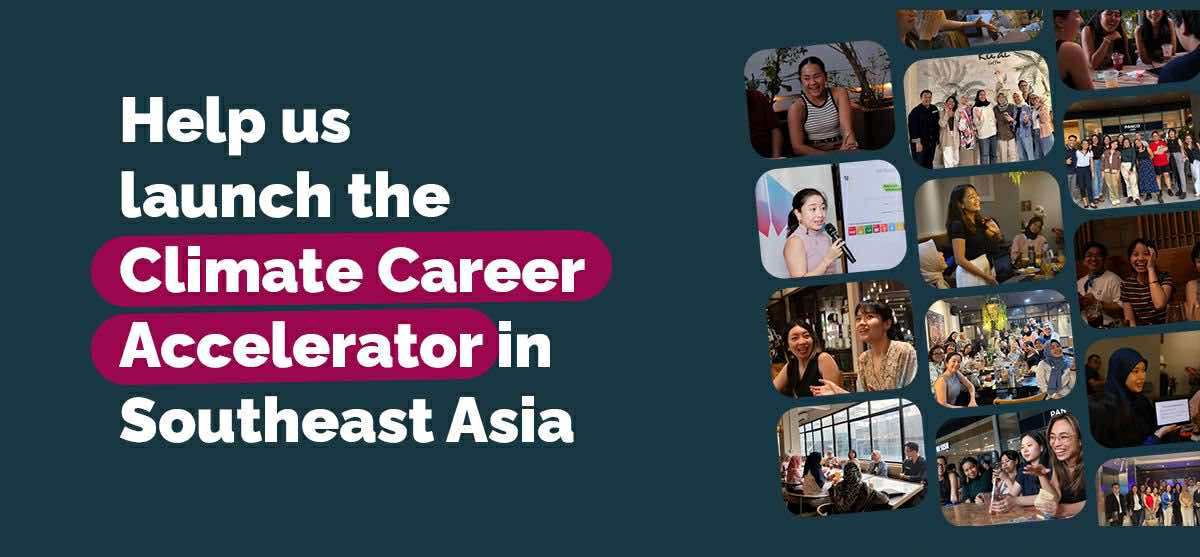
Recognizing this, Jobs that makesense is building the first Climate Career Accelerator for Southeast Asia – a 4-week program designed to support professionals of all backgrounds in entering the green workforce.

The program combines:
It’s an answer to the silent struggle of thousands of Southeast Asians who want to contribute to the climate transition, but simply don’t know how to begin.

People Power is Climate Power

Indonesia’s opportunity to create 1.8 million green jobs won’t be realized by technology alone. It will be realized by people – graduates with big dreams, career shifters seeking meaning, seasoned professionals ready to pivot their skills.
Be Part of the Solution

That’s why Jobs that makesense has teamed up with GiveAsia to launch a crowdfunding campaign to raise USD 15,000. The funds will directly support the Climate Career Accelerator, giving Southeast Asians the tools, skills, and networks to seize the green jobs of tomorrow.

If you want to donate, you can go here.

If you want to access the program yourself, you can go here
Share this article
Share on facebook
Share on twitter
Share on linkedin
Share on whatsapp

Leave a Reply

Your email address will not be published. Required fields are marked *