When Indonesia talks about energy transition, the conversation often revolves around power plants, electric vehicles, and national emissions targets. Yet far less visible, though no less critical, is what transition looks like for small-scale communities whose livelihoods depend on fossil fuels every single day.
In places like Kusamba, a coastal village in Klungkung, Bali, energy transition is not an abstract climate agenda. It directly shapes how fishermen go to sea, how much they spend on fuel, and whether their families can maintain a stable income. Here, the question is not only how fast Indonesia can decarbonize, but how fairly that transition unfolds.
Indonesia’s coastal villages make up roughly 15% of all villages nationwide, with an estimated 90% of coastal households relying on fisheries as their primary livelihood. For small-scale fishers, fuel is often the largest expense: studies show that 60–70% of operational fishing costs are spent on fuel, while access to subsidized diesel remains limited for many.
In Bali, where tourism dominates the public narrative, coastal fishing families often live with modest and volatile incomes. Research on small-scale fishers in northern and eastern Bali shows average monthly earnings of around Rp1–2 million, leaving little room to absorb rising costs or economic shocks.
These realities form the backdrop of Program Nelayan Lestari, an initiative by Azura Indonesia that officially closed its first year of implementation in Kusamba in January 2025.
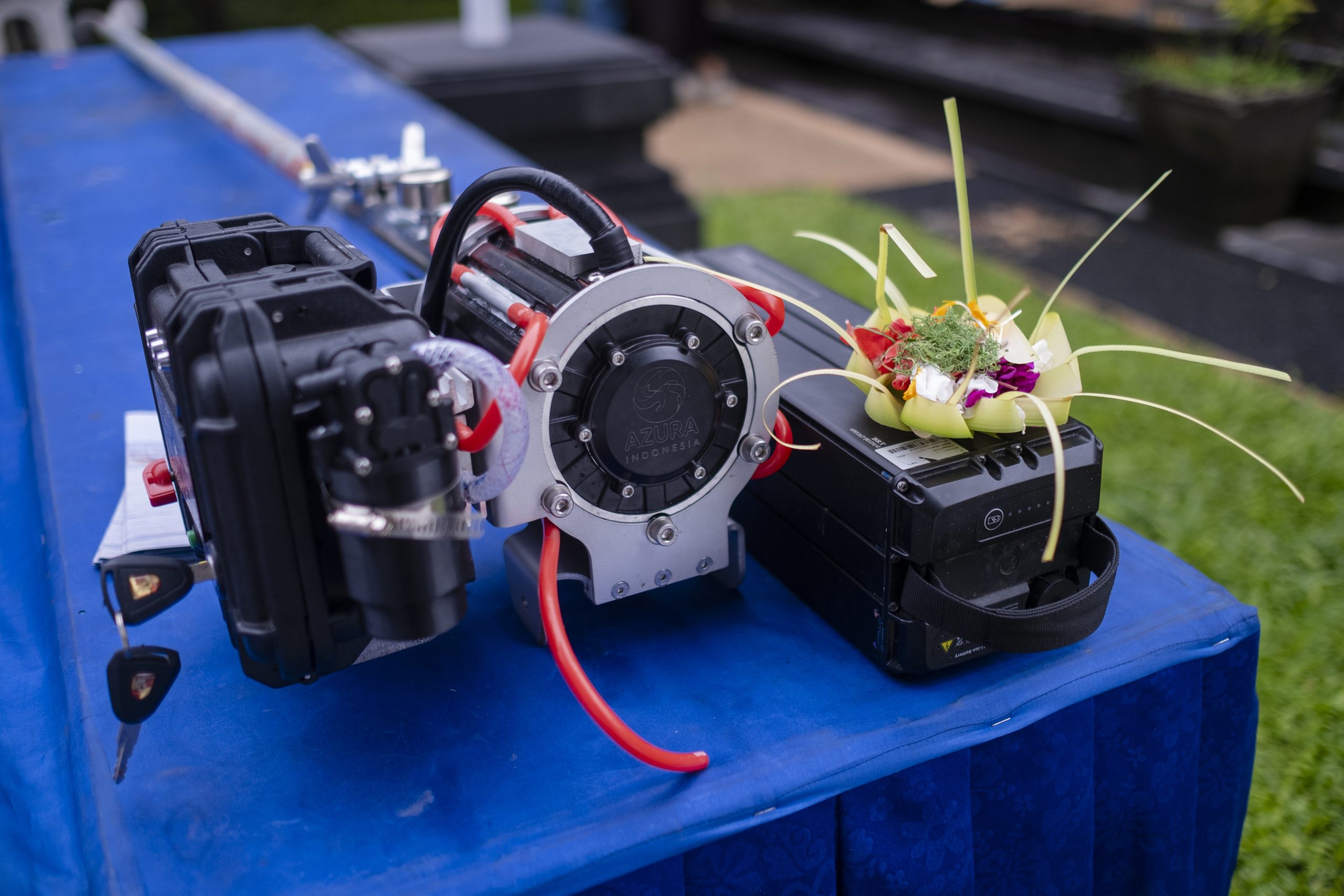
On Thursday, 22 January, residents, fishermen, local government representatives, and program partners gathered in Kusamba for the Closing Ceremony of Nelayan Lestari’s first year. Before any speeches began, guests were invited to walk down to the lower area of the venue, where something unusual for a fishing village sat on display: a MantaOne electric marine engine.
The showcase allowed participants to see-and touch-the electric technology that had quietly become part of daily life for 10 fishermen groups in the village. For many attendees, it was the first time seeing a marine electric vehicle up close.
Inside the main session, Azura Indonesia reflected on the past 14 months of work. During that period, 10 Kelompok Usaha Bersama (KUB) in Kusamba received access to electric boat engines, battery packs, and supporting infrastructure, including a solar-powered charging station built within the village. In total, the program recorded an estimated 246.34 kilograms of carbon emissions reduced through the use of electric marine engines—small in national terms, but meaningful at the community scale.
But as Nadea Nabilla, Founder and Director of Azura Indonesia, emphasized, the program was never only about technology.
She added that the first year laid the groundwork for what comes next.
What makes Kusamba’s experience stand out is how energy transition was linked directly to household resilience.
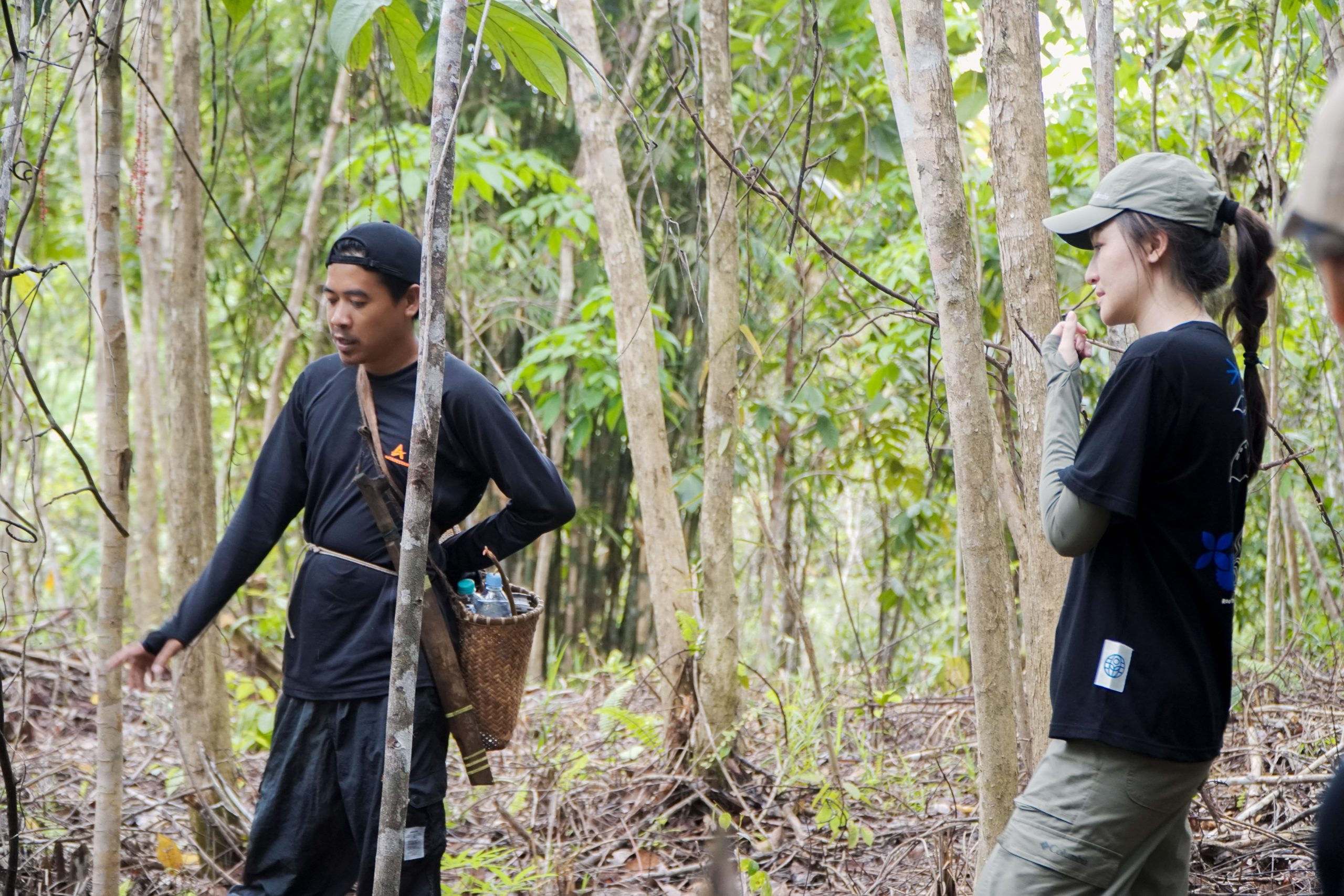
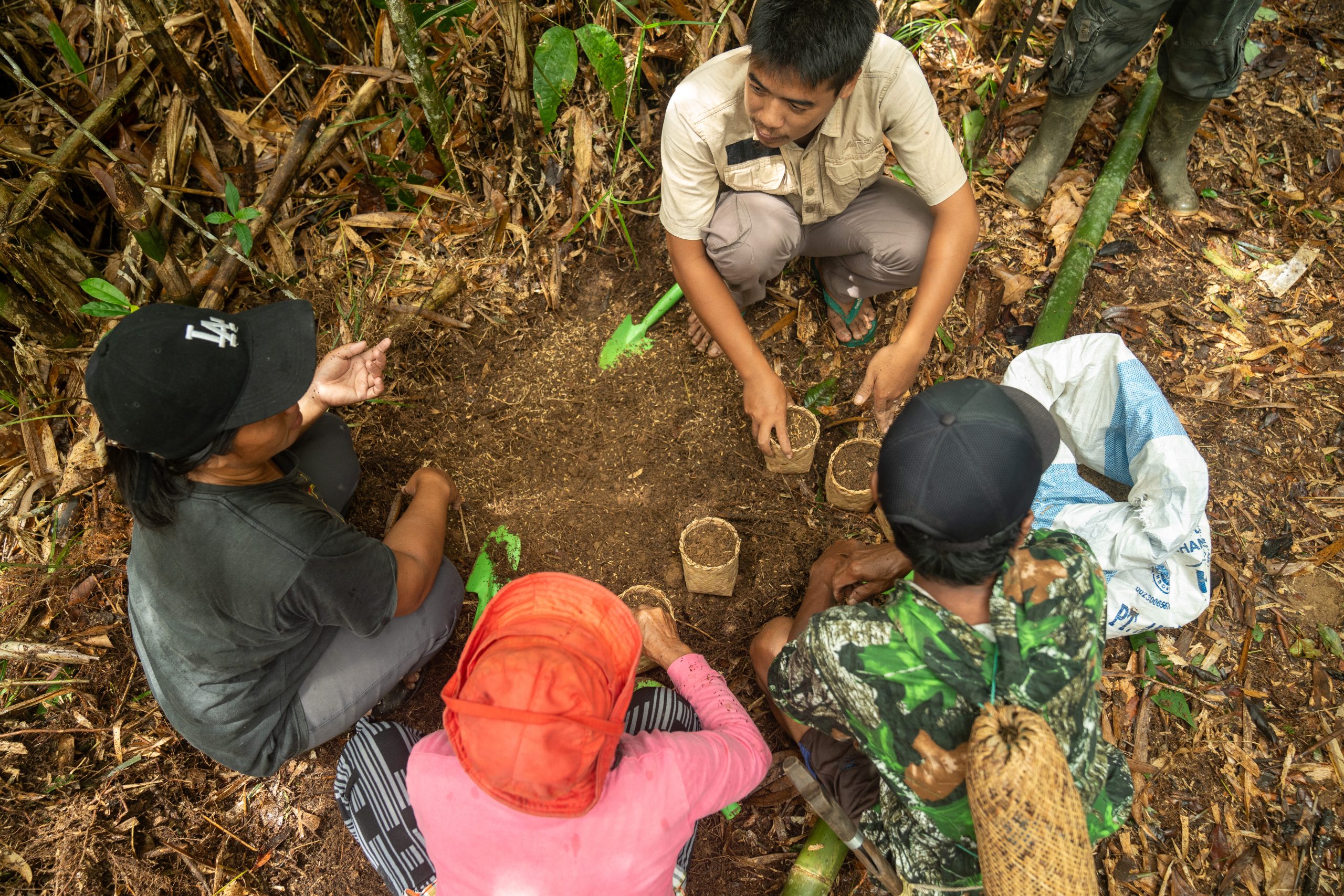
Alongside the deployment of electric engines, the program ran a series of targeted trainings:
The intent was clear: energy transition should not reduce livelihoods to a single intervention, but strengthen the entire ecosystem around fishing families.
This inclusive approach was acknowledged by village leadership. I Nengah Semadi Adnyana, Perbekel (Village Head) of Kusamba, expressed appreciation for how the program engaged different segments of the community.
The closing ceremony was not an endpoint. It marked a transition.
As a sign of long-term commitment, Azura Indonesia and 11 fishermen groups in Kusamba signed a memorandum of understanding for the second year of Nelayan Lestari. The agreement signals continuity—an important distinction in a landscape where many community-based projects end after a pilot phase.
Support from the district government further reinforced this direction. Luh Ketut Ari Citrawati, Acting Head of the Klungkung Regency Food Security and Fisheries Office, emphasized the broader significance of the program.
Kusamba does not offer a shortcut to Indonesia’s net-zero ambitions. What it offers is something arguably more important: proof that energy transition can be people-centered, inclusive, and grounded in local realities.
For a country with thousands of coastal villages and millions dependent on fuel-intensive livelihoods, the lesson is clear. A just energy transition cannot be built solely through national targets or large-scale infrastructure. It must also take shape in places like Kusamba—through trust, local capacity, and sustained collaboration.
From the shoreline of eastern Bali, energy transition looks less like a distant policy goal and more like a shared effort to reduce costs, protect livelihoods, and ensure that climate action strengthens, rather than sidelines, the communities who live closest to the frontlines of change.